The 3 Hottest Tech Sectors in 2026: Where the Jobs Are and How to Get In
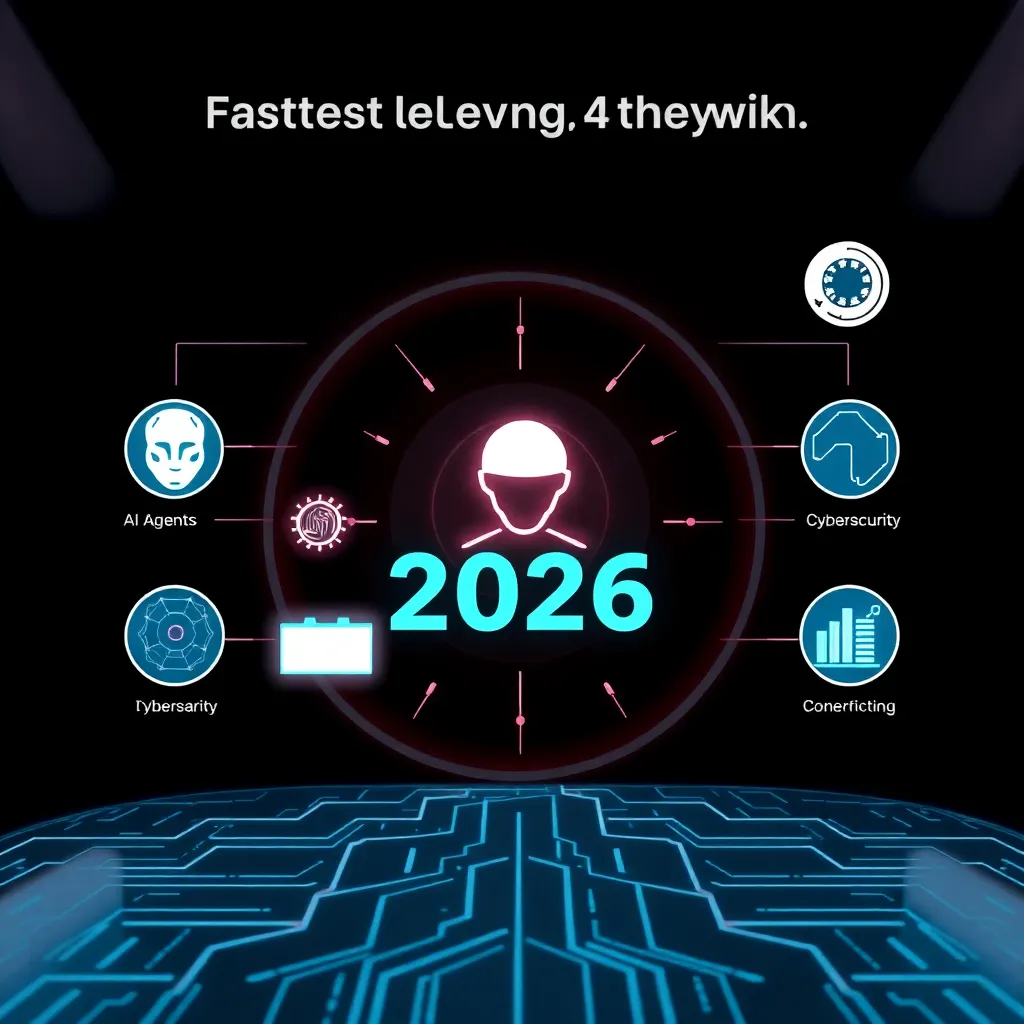
The tech job market in mid-2026 is not the same beast it was twelve months ago. Mass layoffs at the big hyperscalers have stabilized, AI-native roles have exploded, and cybersecurity has become a boardroom imperative rather than an IT afterthought. If you’re a mid-to-senior tech professional looking to make your next move count, you need to know which sectors are actually growing — not just which ones are hyped on social media.
This post breaks down the three fastest-growing tech sectors in 2026 with real market data, current salary ranges, the specific skills that get you those roles, and a clear roadmap for transitioning into each one.
1. AI agent engineering and applied AI
AI agent engineering is the single fastest-growing role in tech in 2026. The numbers are staggering: job postings for “AI agent engineer” and related titles grew over 340% year-over-year between Q2 2025 and Q2 2026, according to data from Indeed and LinkedIn’s emerging jobs reports LinkedIn: Fastest-Growing AI Jobs. This isn’t limited to the big AI labs — enterprises in finance, healthcare, logistics, and retail are all building internal agent teams.
What the roles look like
- AI Agent Engineer: Builds and deploys autonomous agent systems using frameworks like LangGraph, CrewAI, and AutoGen. Core work involves tool-use orchestration, memory management, and multi-agent coordination.
- AI Product Engineer: Bridges the gap between ML models and user-facing products. Think prompt engineering at scale, RAG pipeline design, and evaluation infrastructure.
- MLOps / AI Infrastructure Engineer: Builds the pipelines that make AI agents production-ready — monitoring, logging, guardrails, and cost control.
Salary ranges (2026, US-based)
| Role | Entry (<2 yr) | Mid (2-5 yr) | Senior (5+ yr) |
|---|---|---|---|
| AI Agent Engineer | $140K-$175K | $175K-$230K | $230K-$320K |
| AI Product Engineer | $130K-$165K | $165K-$210K | $210K-$290K |
| MLOps Engineer | $135K-$170K | $170K-$215K | $215K-$275K |
Sources: Levels.fyi, Glassdoor, Blind compensation surveys, Q2 2026.
How to break in
The fastest path for an experienced software engineer is to start building. Ship an autonomous agent that solves a real problem — a code review bot, a personal research assistant, an automated triage system. Publish it on GitHub with clear documentation. Then work through the LangGraph tutorial series, build a RAG pipeline with ChromaDB or Pinecone, and get comfortable with OpenAI’s Agents SDK or Anthropic’s Claude API for tool use.
Certifications aren’t the differentiator here. Production experience is. If you don’t have it at work, build it in public.
2. Cybersecurity engineering and AI security
Cybersecurity has undergone a transformation. The global cybersecurity market is projected to reach $345 billion by the end of 2026, up from $218 billion in 2023 (Gartner, Cybersecurity Market Forecast Gartner). But the big shift is the rise of AI security as a distinct sub-discipline.
Why it’s growing
Three forces are colliding:
- Regulatory pressure: The EU AI Act is now in full effect, requiring organizations to document model safety, bias testing, and adversarial resistance. Similar frameworks are emerging in California and New York.
- The attack surface grew: Every AI agent with tool access is a potential vector. Prompt injection, model extraction, and supply chain attacks on open-source ML models are skyrocketing.
- Talent shortage: (ISC)² estimates a 4.8 million cybersecurity worker gap globally. AI security specialists are even rarer.
Key roles
- AI Security Engineer: Pen-tests LLM applications, builds guardrails, implements red-teaming pipelines.
- Cloud Security Architect: Designs zero-trust architectures for multi-cloud environments. AWS, Azure, and GCP certs still matter here.
- Security Operations (SOC) Engineer: Now augmented by AI-powered SIEM tools like CrowdStrike Falcon and SentinelOne. The role is shifting from log-watching to AI-assisted threat hunting.
Salary ranges
| Role | Mid | Senior | Staff+ |
|---|---|---|---|
| AI Security Engineer | $160K-$200K | $200K-$270K | $270K-$350K |
| Cloud Security Architect | $155K-$195K | $195K-$260K | $260K-$330K |
| SOC Engineer (AI-augmented) | $120K-$155K | $155K-$200K | $200K-$260K |
How to break in
If you’re already in engineering, the smartest move is to focus on AI security. Start with the OWASP Top 10 for LLM Applications — it’s the definitive framework for understanding AI threats. Build a red-teaming tool that tests prompt injection on open-source models. Get hands-on with Lakera Guard or Rebuff for input validation.
For traditional cybersecurity, the CompTIA Security+ and CISSP remain standard baseline certs. But pair them with cloud security certs (AWS Security Specialty, Azure Security Engineer) for maximum impact.
3. Data engineering and AI data infrastructure
Data engineering is quietly becoming the backbone of the AI economy. Every AI agent, every RAG pipeline, every fine-tuning run depends on clean, well-structured data. Data engineers are the unsung heroes of the AI revolution.
The market reality
The US Bureau of Labor Statistics projects 36% growth for data engineering roles between 2025 and 2035 — more than 5x the average for all occupations BLS Occupational Outlook Handbook. Average salaries have crossed $165K for mid-level roles and $220K for senior positions.
What’s changed in 2026
Three trends are reshaping data engineering:
- Unstructured data at scale: Most enterprise data is unstructured — PDFs, emails, Slack logs, call transcripts. The ability to process, chunk, embed, and index this data for RAG systems is now a core data engineering skill.
- Real-time streaming: Batch processing is no longer sufficient. Tools like Apache Flink, Kafka, and Delta Lake are table stakes.
- The rise of the data platform engineer: Companies are building internal data platforms that combine ingestion, transformation, feature stores, and vector databases into a single developer-facing product.
Key skills to learn
| Skill | Why it matters |
|---|---|
| Python + SQL | Non-negotiable fundamentals |
| Apache Spark / Flink | Distributed data processing |
| dbt | Data transformation and modeling |
| Vector databases (Pinecone, Weaviate, Qdrant) | RAG infrastructure |
| Airflow / Dagster | Orchestration and pipeline management |
| Snowflake / Databricks | Cloud data warehousing |
How to break in
Data engineering has the gentlest learning curve of the three sectors for career changers. Start by mastering SQL — not just queries, but window functions, query tuning, and schema design. Then build a portfolio project that demonstrates a complete pipeline: ingest data from an API, transform it with dbt, load it into DuckDB or Postgres, and serve it via a REST API.
The Data Engineering Cookbook by Andreas Kretz and Designing Data-Intensive Applications by Martin Kleppmann are your canonical reading list.
Which sector should you choose?
Your background determines the best path:
- You’re a generalist software engineer (3+ years): AI agent engineering is the best move. Your existing coding skills transfer directly, and the market is desperate for people who can build production systems.
- You’re in DevOps / platform engineering: Data engineering is a natural pivot. You already understand infrastructure, scaling, and reliability. Apply those skills to data pipelines.
- You care about stability and regulation-heavy industries: Cybersecurity, especially AI security, offers deep job security and a clear advancement ladder. It’s less volatile than the AI startup world.
- You’re a career changer (non-tech): Start with data engineering. The entry barrier is lower (SQL is easier than distributed systems), and the demand is insatiable.
The bottom line
The tech industry is always in flux, but the sectors growing today are growing for structural reasons — not hype cycles. AI agents are becoming the default user interface for enterprise software. Cybersecurity threats are multiplying faster than defenses can keep up. Data is the fuel for all of it.
Pick one sector, build public evidence of your skills, and make the transition deliberately. Six months of focused effort in any of these three areas will put you ahead of the vast majority of the competition.
Resources
- LangGraph Documentation
- OWASP Top 10 for LLM Applications
- Levels.fyi Salary Data
- Designing Data-Intensive Applications
- The Data Engineering Cookbook
- CrewAI Framework
- Lakera Guard (AI Security)
- ISC² Cybersecurity Workforce Study
References
[1] LinkedIn: Fastest-Growing AI Jobs [2] Gartner [3] BLS Occupational Outlook Handbook
← Back to all posts